
Stories Written in Thread
Tracing family roots through Ukrainian embroidery and an update on Book Three: Katarina’s Dark Secret.

Did you know?
The total weight of all ants on Earth is equal to or greater than the total weight of all humans: While humans are larger, the sheer volume of ants is immense.
(This makes me cringe!)

DOZENS OF FREE BOOKS IN THIS POST. Scroll down to find the latest offers.
Greetings! If you’re new here, or if you’ve migrated over from my previous newsletter, welcome.
This week, I’m focusing on Ukrainian culture.
The Vyshyvanka: Ukraine’s Woven Code
Did you happen to spot a jovial group wearing brightly embroidered clothing on Thursday, May 21?
Vyshyvanka Day, a global celebration of Ukrainian culture, is celebrated annually on the third Thursday of May. It’s a day when Ukrainians and persons of Ukrainian descent proudly wear their special embroidered shirts to showcase their heritage and virtual unity.
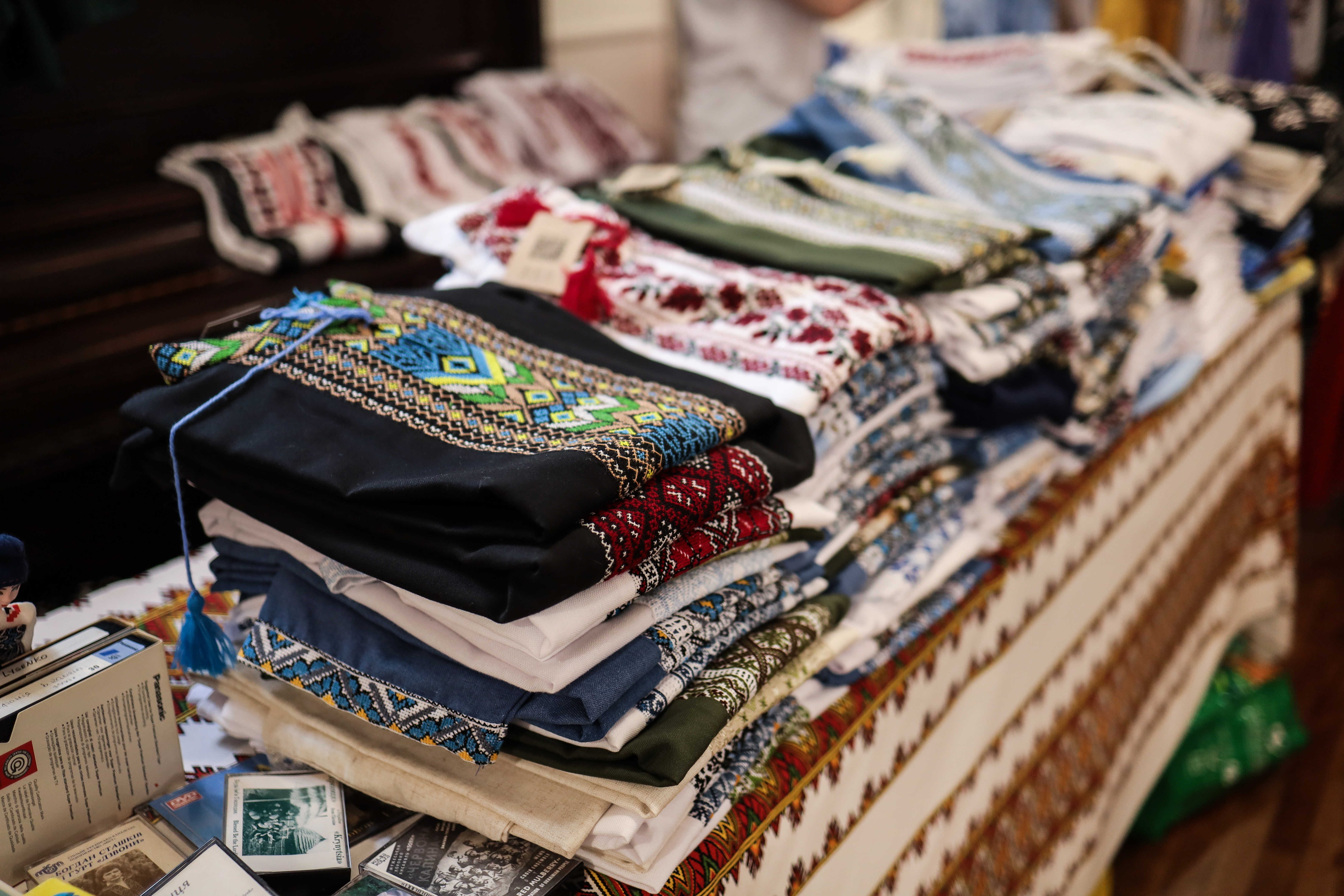
What’s so cool about these peasant shirts?
It’s the stitching! Each blouse tells a personal story, connecting individuals to their ethnic identity and family geography. In other words, these threads talk!
Historically, every region, village, and even family in Ukraine possessed distinct embroidery styles. Specific combinations of geometric shapes, floral motifs, and thread colors identified exactly where a person came from.
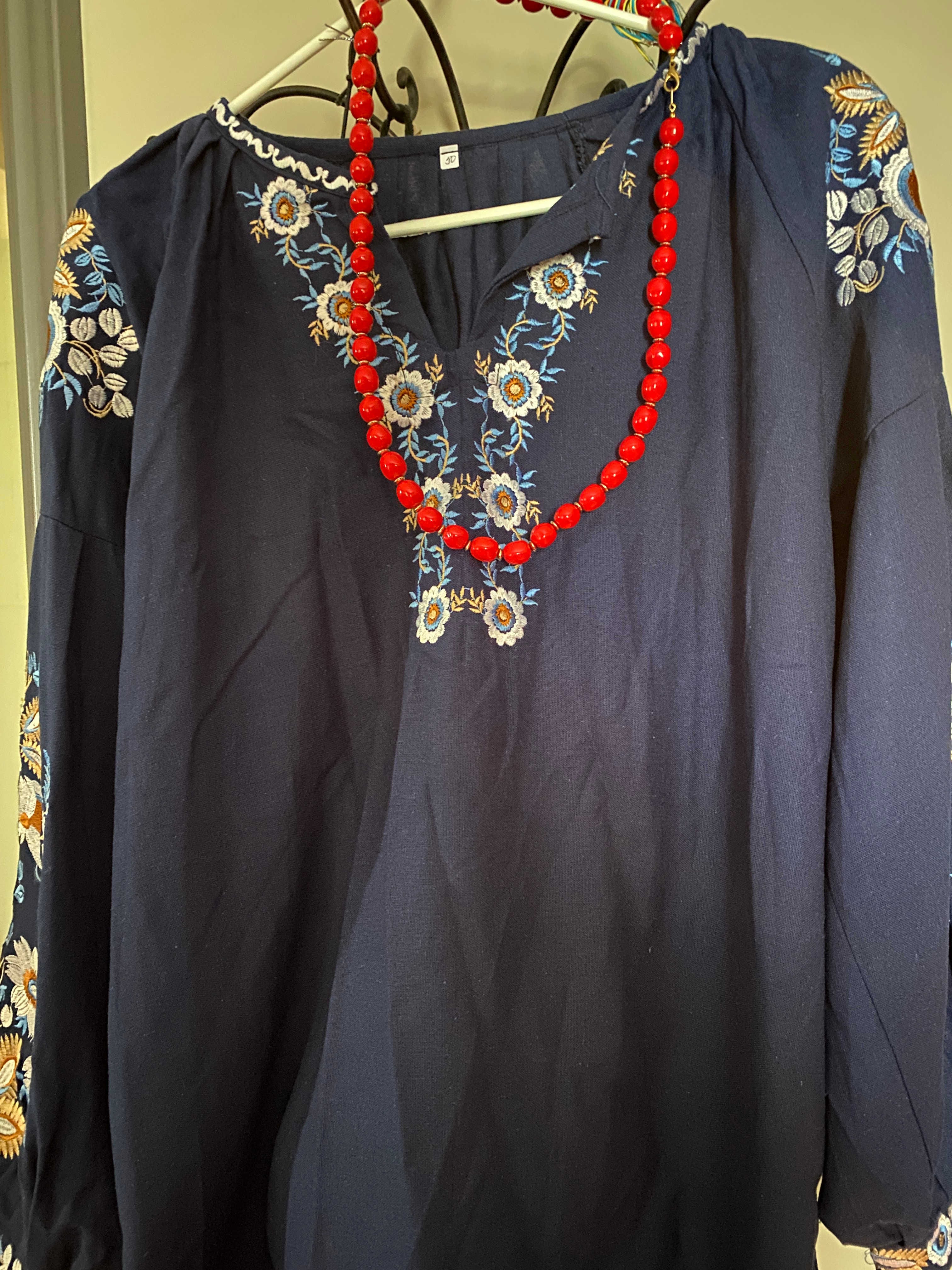
When I purchased my shirt, I gave the vendor the names of my ancestral towns—small villages around Zaporizhia, Dnipro, and Melitopol, where my grandparents were born. She immediately pulled this one from the rack. Isn’t it beautiful?
My blouse represents the heartland of Central Ukraine, balancing the artistic fluidity of the Kyiv region with the sunny imagery of the Dnieper river valleys.
The Symbolism in the Stitches
Forget-Me-Nots & Vines: The front showcases tiny forget-me-nots and winding vines. In Ukrainian tradition, the forget-me-not is the ultimate symbol of memory, fidelity, and eternal connection to family history. The vines represent the continuation of life and enduring family lineages.
Sunflowers: The sleeves feature the sunflower, Ukraine’s national flower. Sunflowers represent prosperity, well-being, warmth, and hope.
(Historical note: During the 19th and early 20th century, the south of Ukraine was known as the Land of the Mennonites. The Mennonites were famous for growing and milling sunflower seeds. Hence, the flowers on my shirt fit the region.)
The Fabric: Historically, most shirts were made of white or unbleached linen. Colored fabric became common in the late 19th century. The deep blue background of my shirt represents the sky and water, traditionally serving as a symbol of protection and peace.
The Namysto: Women often pair their shirts with a traditional red bead necklace called a Namysto. Historically, these necklaces indicated status and functioned as a protective amulet. The bright red color was believed to ward off illness and evil.
Beyond decoration, this embroidery also served as a talisman to protect the wearer’s health and soul. Mothers embroidered shirts for their children, and brides stitched them for their grooms, weaving prayers of safety into every knot.
Growing up in a religious Mennonite community with German-Ukrainian roots, the dissemination of ancient superstitions was not encouraged. However, as I explore my heritage further, I’m actively learning more about these traditions.
If you have a peasant shirt, please drop a photo in the comments; or just say hi, I’m Ukrainian.
Update on Katarina’s Dark Secret
Three years of writing, revising, and editing are finally coming to an end. While waiting for the final editing, I’ve revised and tinkered with the rough draft too many times to count. Since both my editor and I managed health issues this year, the release took a back seat to real life. However, I promise you, Katarina’s Dark Secret will be published this year.
Like the first two books in the series, Book Three: Katarina’s Dark Secret takes place across two timelines. Katarina’s story is set in Ukraine during World War I and the Russian Civil War. Peter’s story is set in Munich, Germany, during the post-WWII rebuilding era. The core theme centers on discovering family secrets and healing intergenerational trauma.
If you read Book One, you will remember that Peter finds Katarina’s diaries in the Munich rubble. As he tries to rebuild his own life, he searches her records for clues about her disappearance. He wants to believe that she didn’t die, but went into hiding in Ukraine while working as a translator for the SS. Through her teenage diaries, he learns about their family’s German-Mennonite culture in Ukraine.
Book One, Katarina’s Dark Shadow provides an educational overview of the German-speaking Mennonite culture that dominated southern Ukraine at the beginning of the twentieth century—a society later destroyed by Stalinist policy and genocide.
Book Two, Katarina’s Dark Journey focuses on the birth of Ukraine as a nation with an overview of the conflicts between the Red Army and the Ukraine insurgents; and the subsequent threats to the women-led families that dominated the era.
Although this series deals with many historical elements, they are fictional stories. Writing it, I found the history research heavy and sometimes difficult to portray.
If you’ve already read the series, kindly leave a review on Amazon. If you’ve already done so, thank you.
If you’d like to learn more about my books, please click the image at the bottom of this page. If you’re also interested in Christian non-fiction, you can find this work on Amazon under the pen name Miranda J. Chivers.
Thank you for joining my writing journey.
Please scroll down for this week’s book offers.
About the Author
MJ Krause-Chivers is a historical fiction writer and a descendant of Ukrainian Mennonite refugees who fled the Russian Civil War in the 1920s for the safety of Canada. This deep-rooted family history drives her compassionate and unflinching approach to the dark realities faced by refugees, both past and present. In her forthcoming novel, “Katarina’s Dark Secret,” she explores the enduring weight of migration and the resilient threads of family that refuse to be broken by time or borders.
“Katarina’s Dark Secret” is coming soon to Amazon. Subscribe to receive updates and exclusive content as we uncover the secrets of the past.
Proceeds from my historical fiction series support Ukrainian charities. Buy a book, save a life.

Looking for a new book? Find your next read with these latest offers.
Group Promos:
Click these images to find your next read.


Coming soon:

UKRAINE: Spring has sprung but the worst humanitarian crisis since the second world war continues. Approximately ten million Ukrainians are displaced, both internally and globally. Women, children and the elderly, who cannot escape the war zone, survive in meager circumstances under the constant shadow of death.
Your support is needed to provide life-saving essentials—from generators and thermal kits to food and emergency medical care—to those who refuse to be broken by the darkness.
Please donate to these registered charities who work diligently at the front lines bringing life to the suffering: Friends of the Mennonite Centre in Ukraine and AMD for Hope
FIND MY BOOKS

This was a fascinating lesson in Ukrainian clothing. I have always admired it, so it is nice to have the background. I grew up in Edmonton with a lot of Ukrainian people. Ukrainina Village is a wonderful depiction of Ukrainian history in that area.