
TRUTH AND RECONCILIATION CANADA
An essay about inter-generational trauma

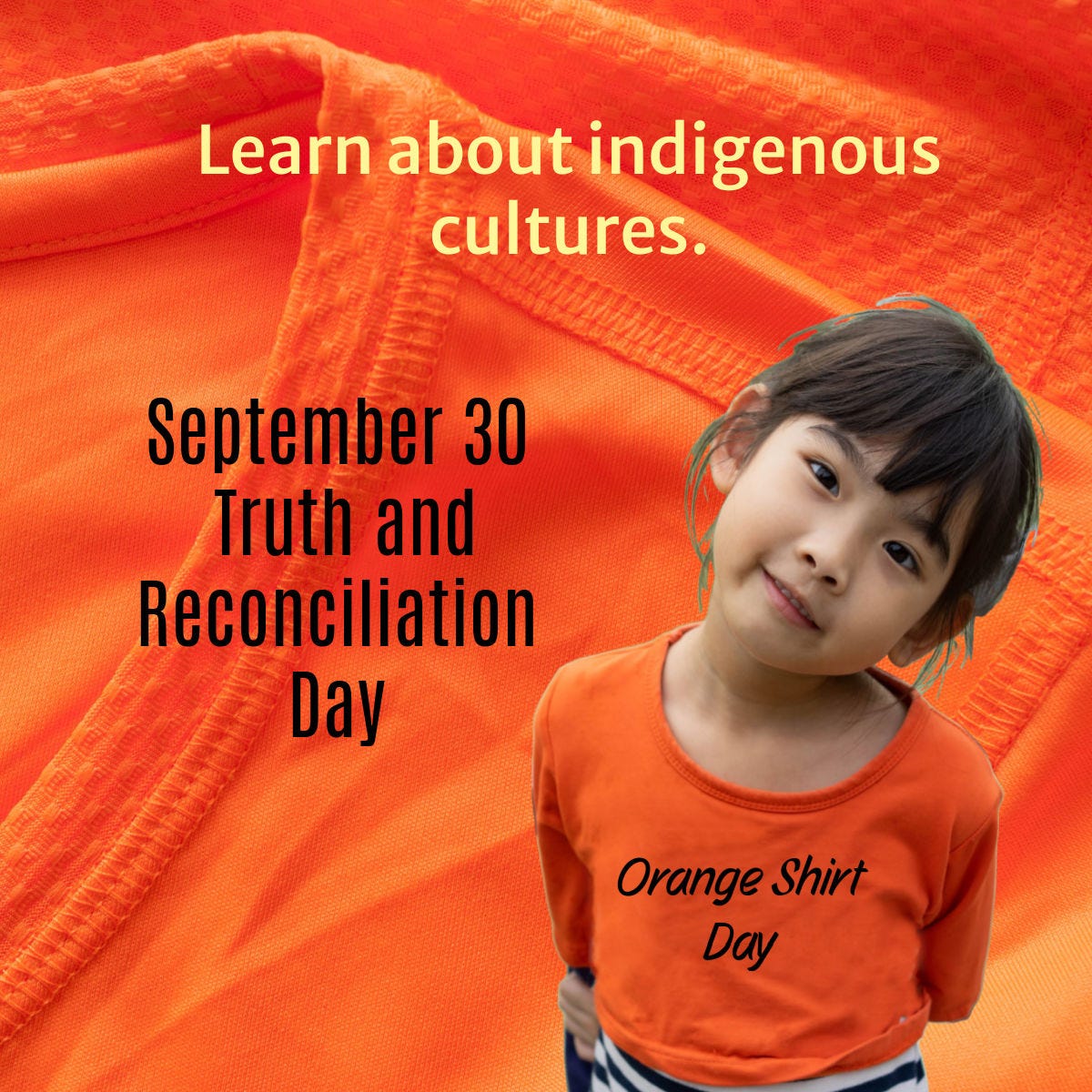
September 30 was Truth and Reconciliation Day in Canada—a federal holiday to honor the Indigenous survivors of the tragic residential school system. It coincides with Orange Shirt Day, a grassroots effort to bring awareness to the losses suffered by Indigenous children and their communities.
While this day reminds us of how misguided government policies stripped generations of their well-being, it is also a vital step toward repairing that injury.
Understanding Intergenerational Trauma
We often associate intergenerational trauma with war survivors, but it can affect anyone, anywhere, at any time.
Trauma’s deep impact can cause mental health issues, damage self-esteem, create learning challenges, and impair relationships. These struggles often lead to behavioral problems and addiction. Without proper intervention, these dysfunctional coping methods are passed on to future generations, becoming intergenerational trauma. This is precisely the systemic destruction we see within Indigenous communities today following decades of the residential school system.
Thankfully, awareness, education, and support are helping these communities repair decades of harm, but true healing is a difficult, long-term journey.
More Than an Apology
As a former social worker, a C-PTSD survivor, a descendant of refugees from Soviet Ukraine, and the sister of a Deaf residential school survivor, I know a lot about trauma. I understand the anger, the sorrow, and the feelings of helplessness caused by biased government policies and systemic abuse.
Sadly, governments, acting with blind self-interest and swayed by popular opinion, have historically prioritized politics over people. Healing the past and preventing injury is rarely a priority. Too often, governments close their eyes and blame-shift atrocities, which only causes more suffering.
Dwelling on the hurt caused is rarely helpful, but acknowledging the injury helps us move towards a better future. Apologizing is a step in the right direction but we must do more. We must participate in the process. By joining together, we can help heal intergenerational trauma.
The injury to our indigenous people damaged generations. Likewise, healing will continue for generations.
Truth and Reconciliation Day is both a national acknowledgement of this dark chapter in Canadian history and a celebration of healing. By standing shoulder-to-shoulder with the residential survivors, we join with them to heal the past and look forward to a brighter future.
To read more about Truth and Reconciliation Day, click this link.
CHECK OUT THIS WEEK’S BOOKS:
Click the images below.




MJ Krause-Chivers writes historical fiction set in Ukraine during the Russian Civil War and WW1. Check out her award-winning books on Amazon.